For centuries, many women have composed, played and sung while overcoming prejudice and restrictions: they were often not allowed to study, publish or perform in public. On this page, we meet some leading women in music history, from the Middle Ages to jazz: their lives, their styles and an interesting fact about each one.
01 · Medioevo
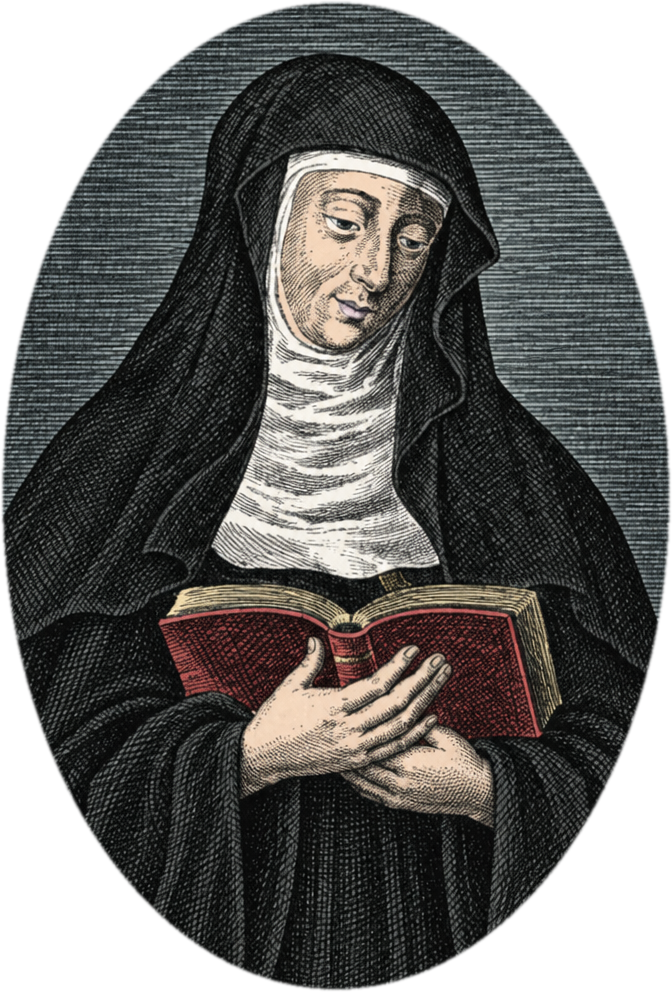
Hildegard von Bingen
1098–1179
The first great woman composer in historySyllabic and melismatic singingSacred monophony
Life
Born in the Rhineland as the tenth child of a noble family, she is placed in the care of a convent at the age of eight. She becomes an abbess and is also a composer, physician, herbalist, poet and adviser to popes and Emperor Federico Barbarossa. She describes her mystical visions in works such as Scivias («Know the Ways»).
Style
For her, music unites heaven and earth. She writes 77 liturgical chants collected in Sinfonia dell'armonia delle rivelazioni celesti: monophonic melodies that alternate between syllabic singing (one note per syllable) and melismatic singing (many notes on one syllable), with voices rising to high pitches.
Fun fact — She invented an «unknown language», an alphabet and around a thousand new words: perhaps a secret language for her fellow nuns.
The first woman composer to have her music printedMadrigaleVocal polyphony
Life
Probably born in Casole d'Elsa, near Siena, she is a singer, lutenist and composer. In 1568, she publishes her Primo libro de madrigali a quattro voci in Venice: she is the first woman in history to have a collection of her music printed.
Style
She writes refined polyphonic madrigals, paying close attention to the meaning of the words, in the style of the great masters of her time.
Fun fact — In the dedication of her book, she writes that she wants to expose «the vain error of men», who believed that they alone possessed artistic talent.
Baroque sacred musicEarly sonatas by a woman composerBasso continuo
Life
Born into a noble family in Novara, she enters the Ursuline convent at the age of sixteen, where she remains for the rest of her life, becoming mother superior. She continues composing into old age, publishing around 200 pieces in 20 collections.
Style
She mainly writes sacred music (motets, masses and psalms), as well as some of the first instrumental sonatas composed by a woman, with basso continuo and contrasts typical of the Baroque period.
Fun fact — She was called «the muse of Novara»: she published her first work on her own when she was over fifty.
Child prodigyA career cut short by prejudiceClassicismo
Life
Known as «Nannerl», she was Wolfgang Amadeus's older sister. A child prodigy on the harpsichord and piano, she travelled around Europe with her brother, performing at royal courts. When she reached marriageable age, her father stopped her from continuing her career: she became a piano teacher in Salzburg.
Style
A brilliant performer and composer: Wolfgang praised her works, but none of her compositions have survived.
Fun fact — Her exercise book, the «Nannerl Notenbuch», contains the first pieces composed by the young Wolfgang.
Romantic LiedMusical salonMusic published under her brother's name
Life
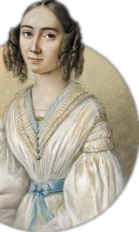
She was born in Hamburg and was Felix Mendelssohn's older sister. An outstanding pianist, she was told by her family to treat music only as an «accomplishment». She organised the famous Sunday concerts at her home in Berlin.
Style
She composed over 460 pieces: Lieder, piano pieces such as the cycle Das Jahr («The Year»), and chamber music. Some of her Lieder were published under her brother's name.
Fun fact — Queen Victoria told Felix that her favourite Lied of his was «Italien»: it was actually by Fanny.
Great concert pianistPiano concertoPlaying from memory
Life
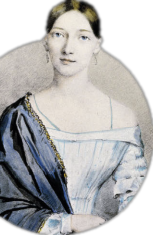
She was born in Leipzig, the daughter of piano teacher Friedrich Wieck. She made her debut at nine and became one of the greatest pianists of the nineteenth century. She married composer Robert Schumann, raised eight children and continued performing throughout Europe.
Style
She composed a piano concerto, a trio, Lieder and piano pieces. As a performer, she helped spread the music of Robert Schumann and Brahms and introduced the practice of playing from memory.
Fun fact — Her portrait appeared on the German 100-mark banknote.
First woman to win the Prix de RomeImpressionismoChoral music
Life
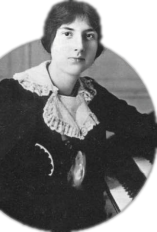
She was born in Paris into a family of musicians; her sister Nadia would become a famous teacher. In poor health since childhood, in 1913 she became the first woman to win the Prix de Rome for composition. She died at just 24.
Style
Intense, radiant music, close in style to Debussy: choral psalms, Lieder and orchestral pieces such as D'un soir triste and D'un matin de printemps.
Fun fact — She dictated her last compositions to her sister Nadia because she was too weak to write.
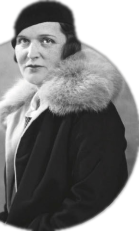
She was born near Paris and studied at the Conservatoire against her father's wishes. She was the only woman in the «Gruppo dei Sei», a group of young French composers who were friends of Jean Cocteau, alongside Poulenc, Milhaud and Honegger.
Style
Fresh, witty and clear music, far removed from Romantic moods: concertos, ballets, chamber music and film scores.
Fun fact — She composed until she was ninety, also working as a teacher and accompanist to earn a living.
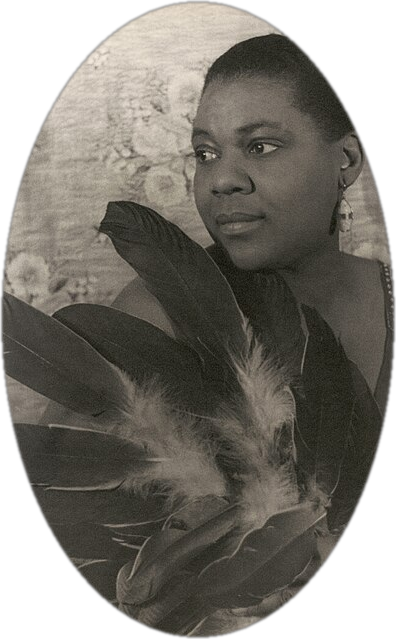
She was born in Chattanooga, Tennessee, and sang in the streets as a girl. In the 1920s she became the highest-paid Black singer in America and recorded with Louis Armstrong.
Style
A powerful, dramatic voice that tells of pain, poverty and injustice: this is classic blues, the foundation of vocal jazz.
Fun fact — She is called «the Empress of the Blues»: her St. Louis Blues with Armstrong is a landmark recording.
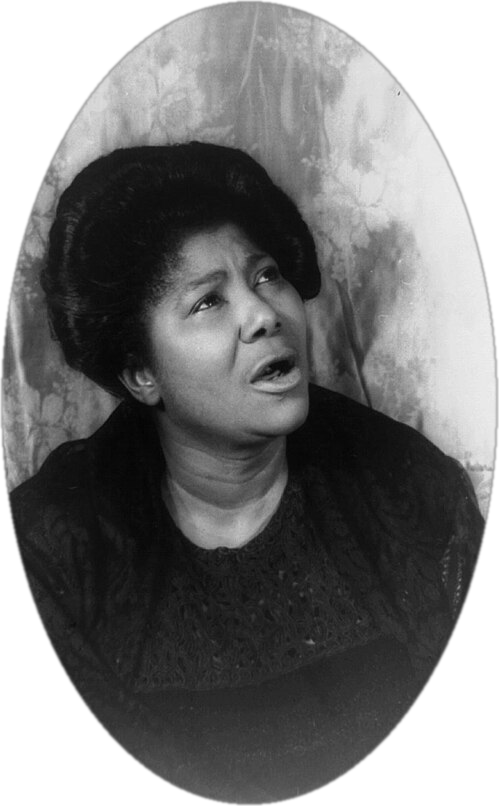
She was born in New Orleans and sang in the Baptist church choir. After moving to Chicago, she became the queen of gospel and took part in the civil rights movement alongside Martin Luther King.
Style
A deep voice full of faith that combines spiritual singing with the rhythm of the blues; she always refused to sing non-religious music.
Fun fact — In Washington in 1963, she was the one who shouted to King: «Tell them about the dream, Martin!», before his famous «I have a dream» speech.
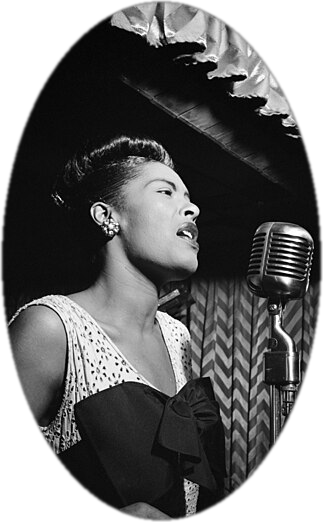
She was born in Philadelphia and grew up in Baltimore amid great hardship. She began singing in Harlem clubs and worked with Count Basie, Artie Shaw and saxophonist Lester Young, who nicknamed her «Lady Day».
Style
Her voice was not powerful, but it was unique: she sang «behind» the beat, like an instrument, giving each word a deep meaning.
Fun fact — In 1939 she recorded Strange Fruit, one of the first songs against racism in the United States.
She was born in Virginia and grew up in poverty in Yonkers, New York. In 1934 she won a contest at Harlem's Apollo Theater and began singing with Chick Webb's orchestra. She became the «First Lady of Song», winning 13 Grammys.
Style
A clear voice with a range of three octaves, perfect pitch accuracy and extraordinary skill in scat, vocal improvisation using meaningless syllables.
Fun fact — At a concert in Berlin in 1960, she forgot the words to Mack the Knife and made up new ones on the spot: the recording won a Grammy.
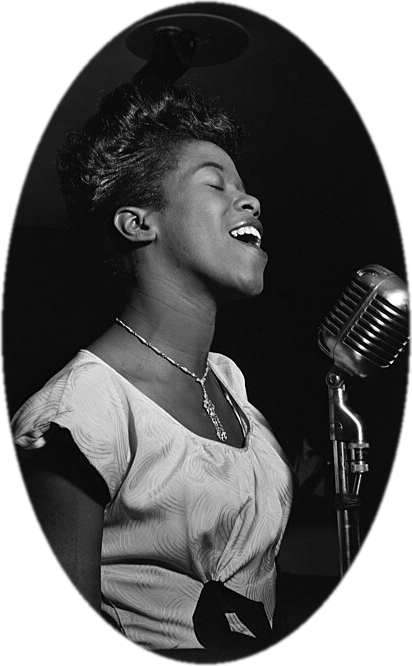
She was born in Newark, New Jersey, and sang and played the organ in church. Like Ella, she won the Apollo Theater contest and worked with Earl Hines, Dizzy Gillespie and Charlie Parker.
Style
A dark, velvety voice with an enormous range, used with the freedom of bebop: leaps between notes, daring harmonies and great technical skill.
Fun fact — She was nicknamed «Sassy» and «The Divine One»: many musicians considered her voice the most beautiful in jazz.
High Priestess of SoulJazz and classical musicCivil rights
Life
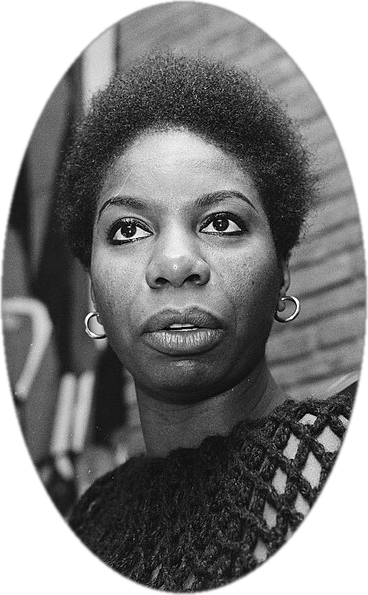
Born Eunice Waymon in North Carolina, she studied classical piano, dreaming of becoming a concert pianist, but was rejected by a conservatoire, she believed because of the colour of her skin. She began playing and singing in clubs under the stage name Nina Simone.
Style
She combined jazz, blues, soul, gospel and classical music, with an intense voice and piano playing influenced by Bach. Her songs became civil rights anthems.
Fun fact — She was called «the High Priestess of Soul»; Feeling Good and My Baby Just Cares for Me are still very famous today.