Sound and its properties
Made with ♥ by Maristella Povellato
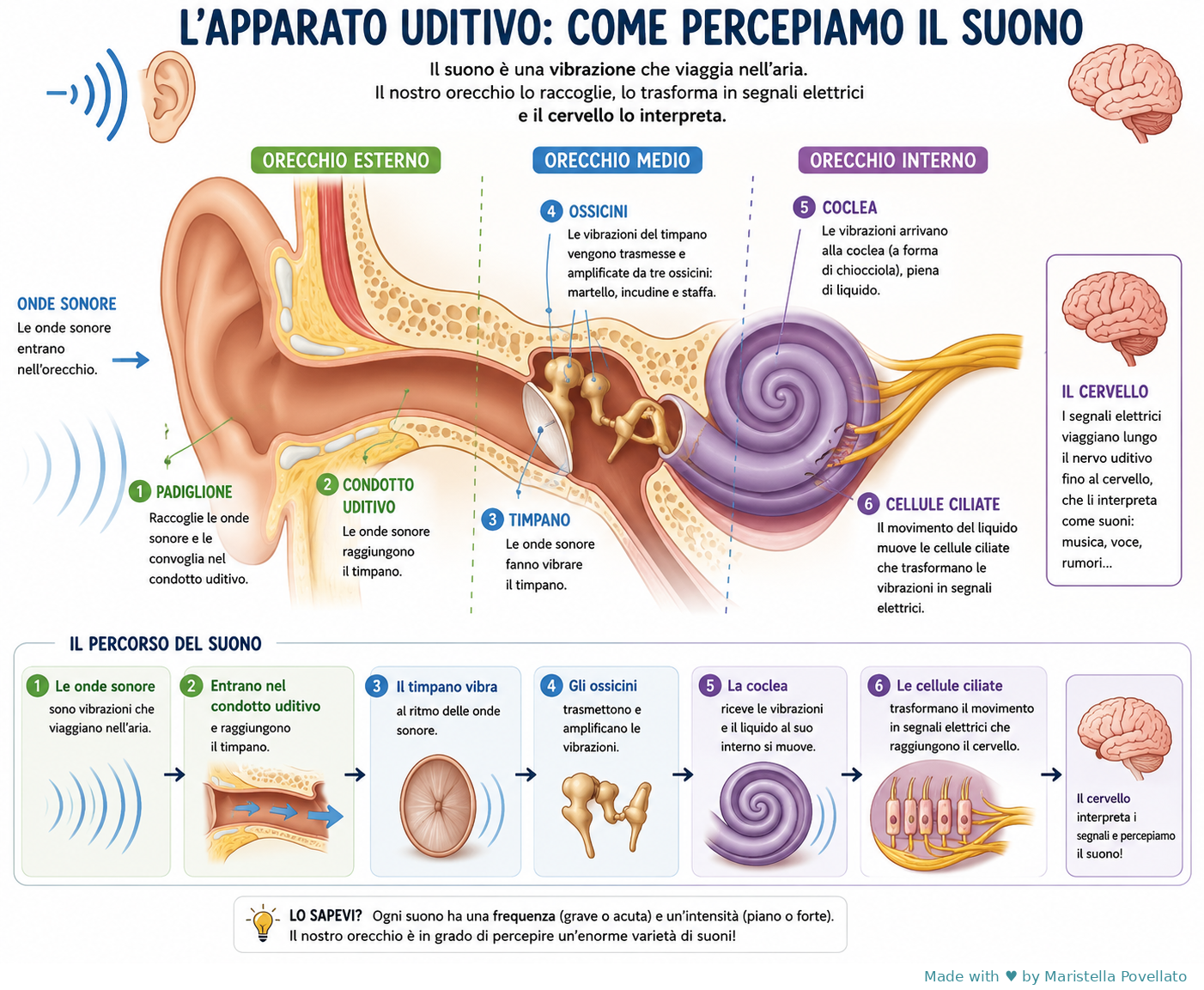
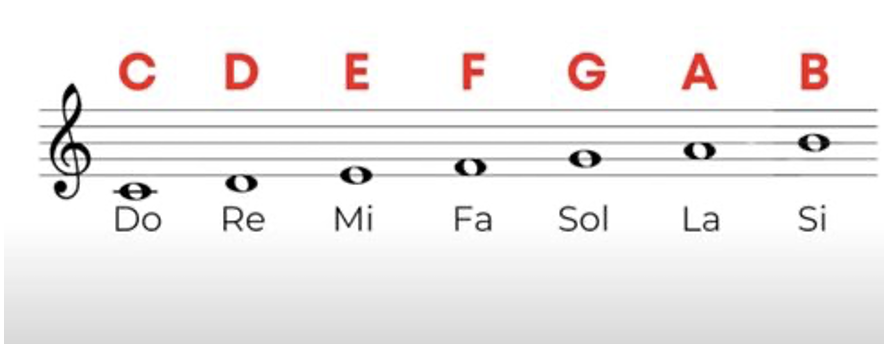
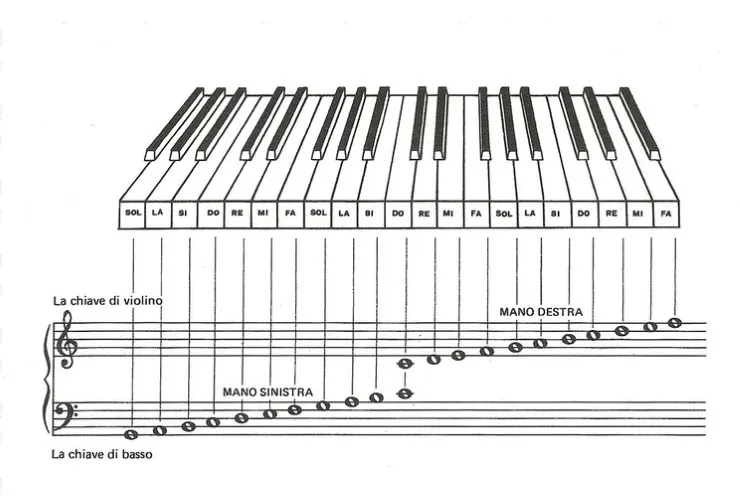
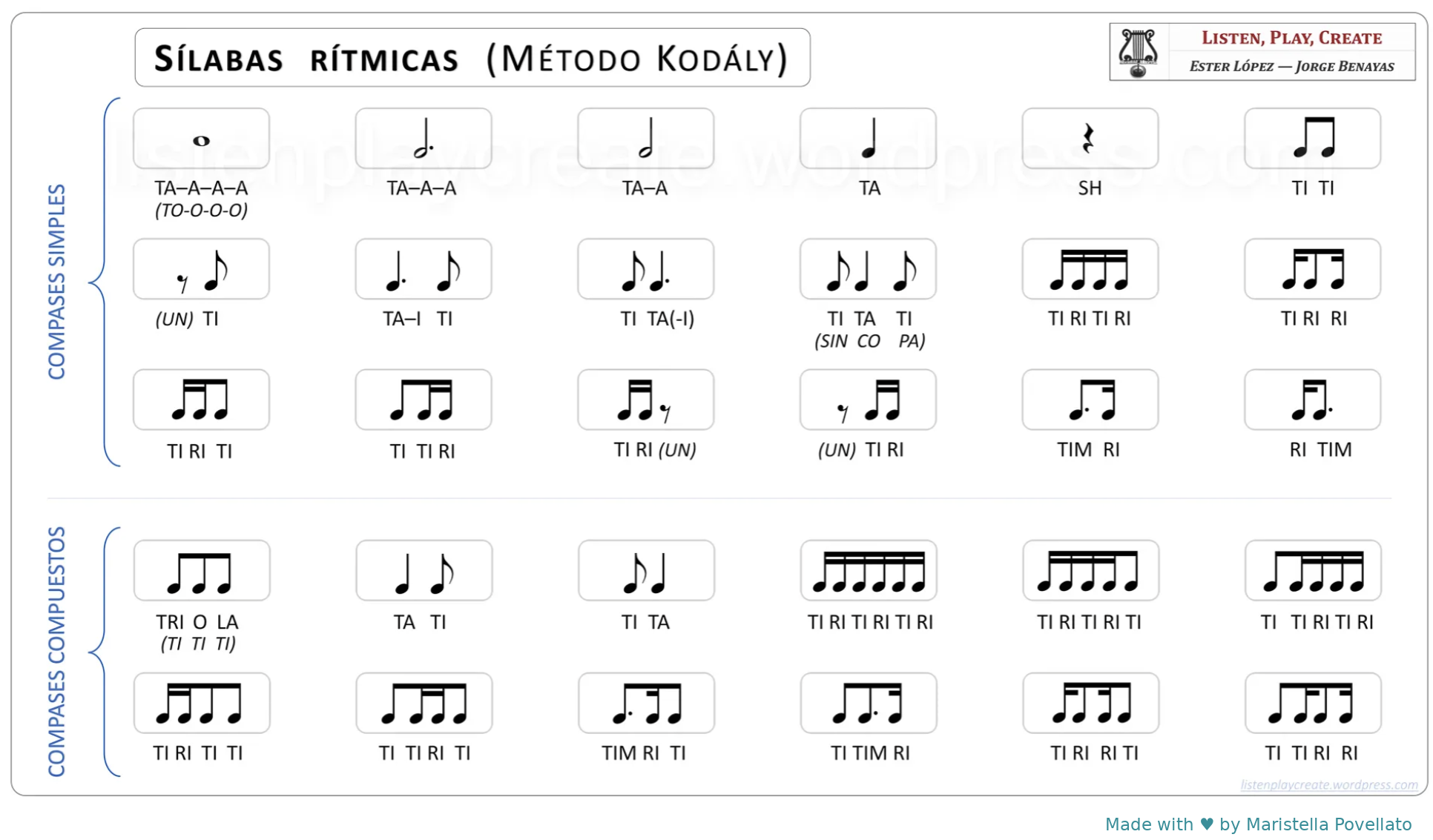
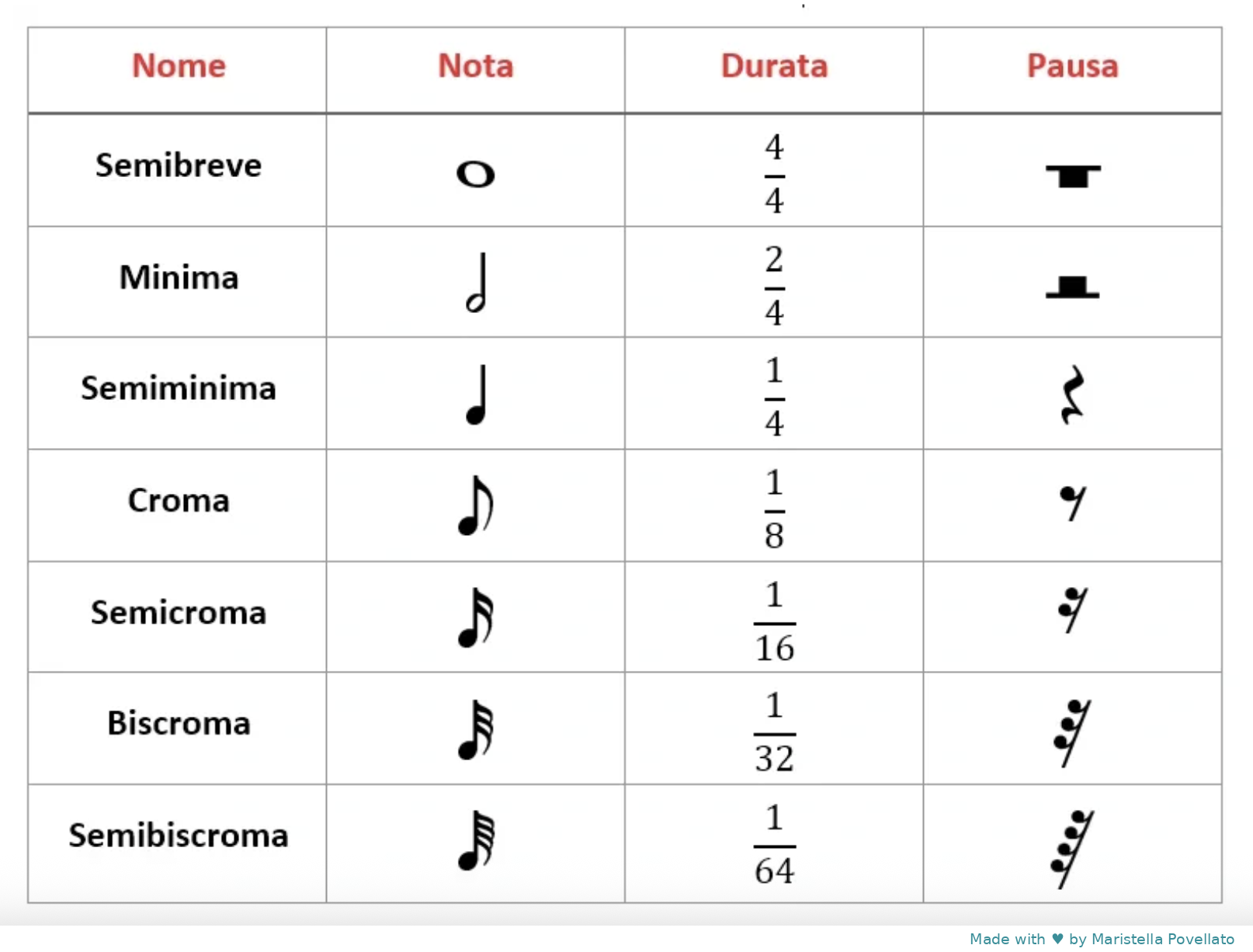
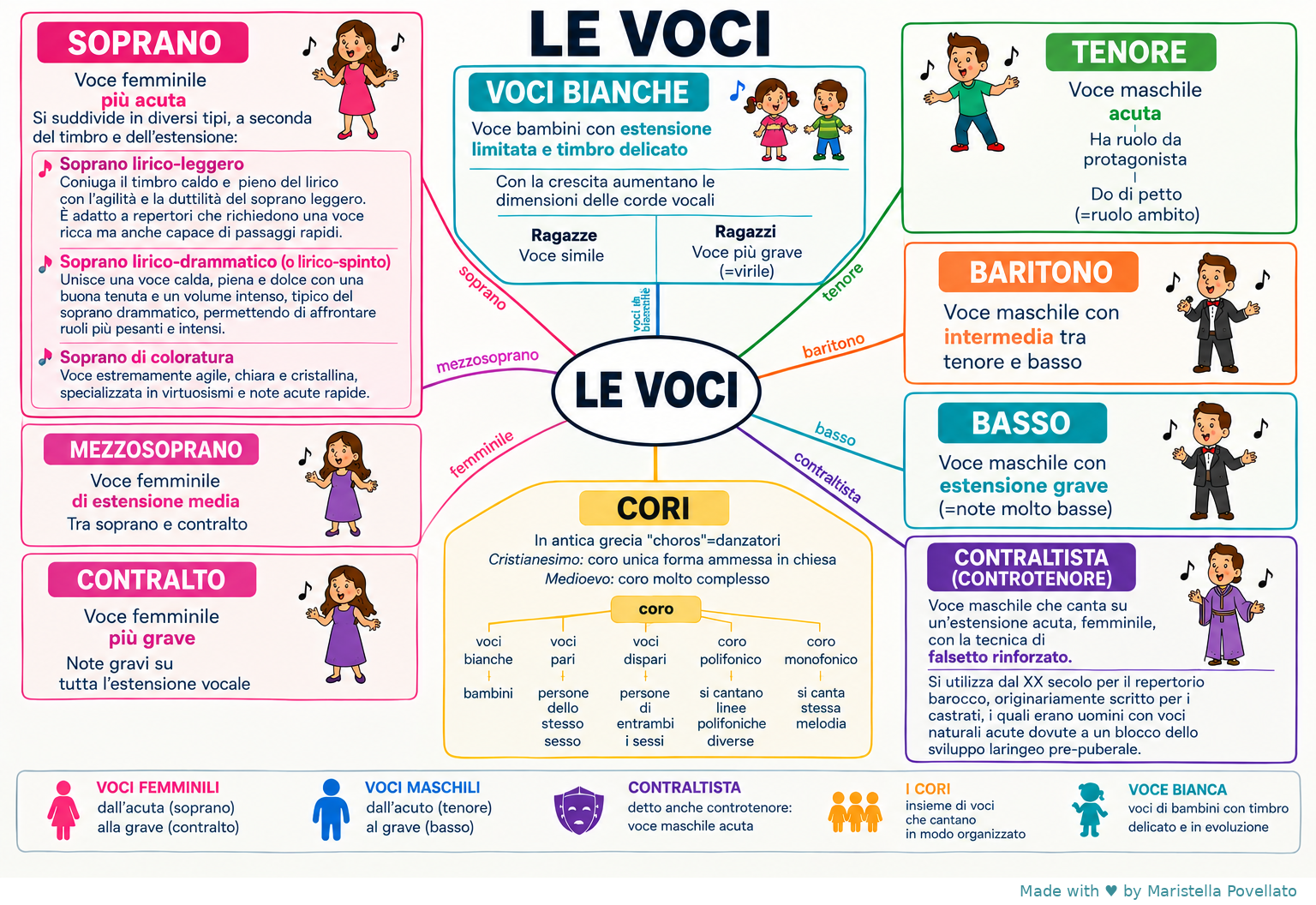
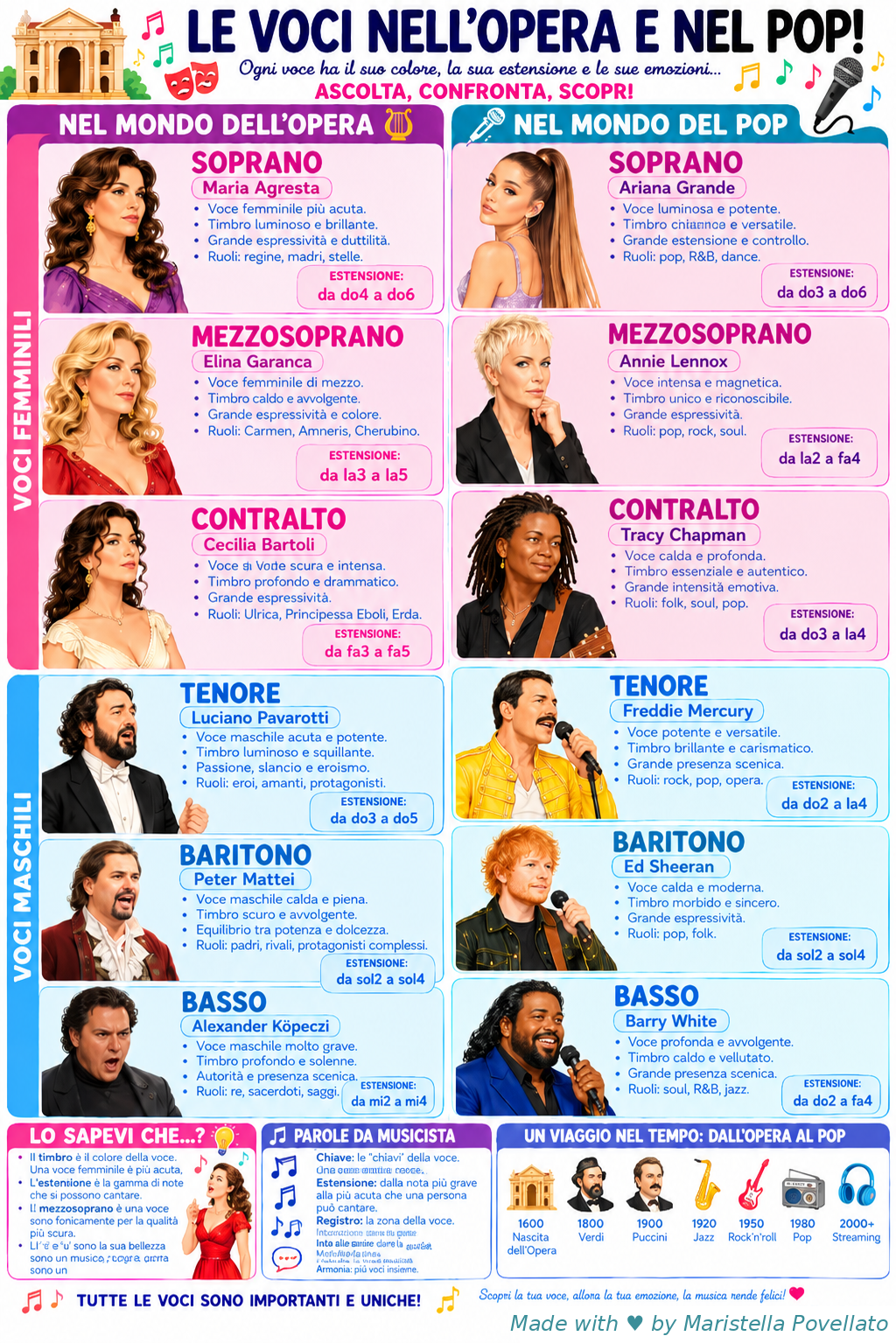
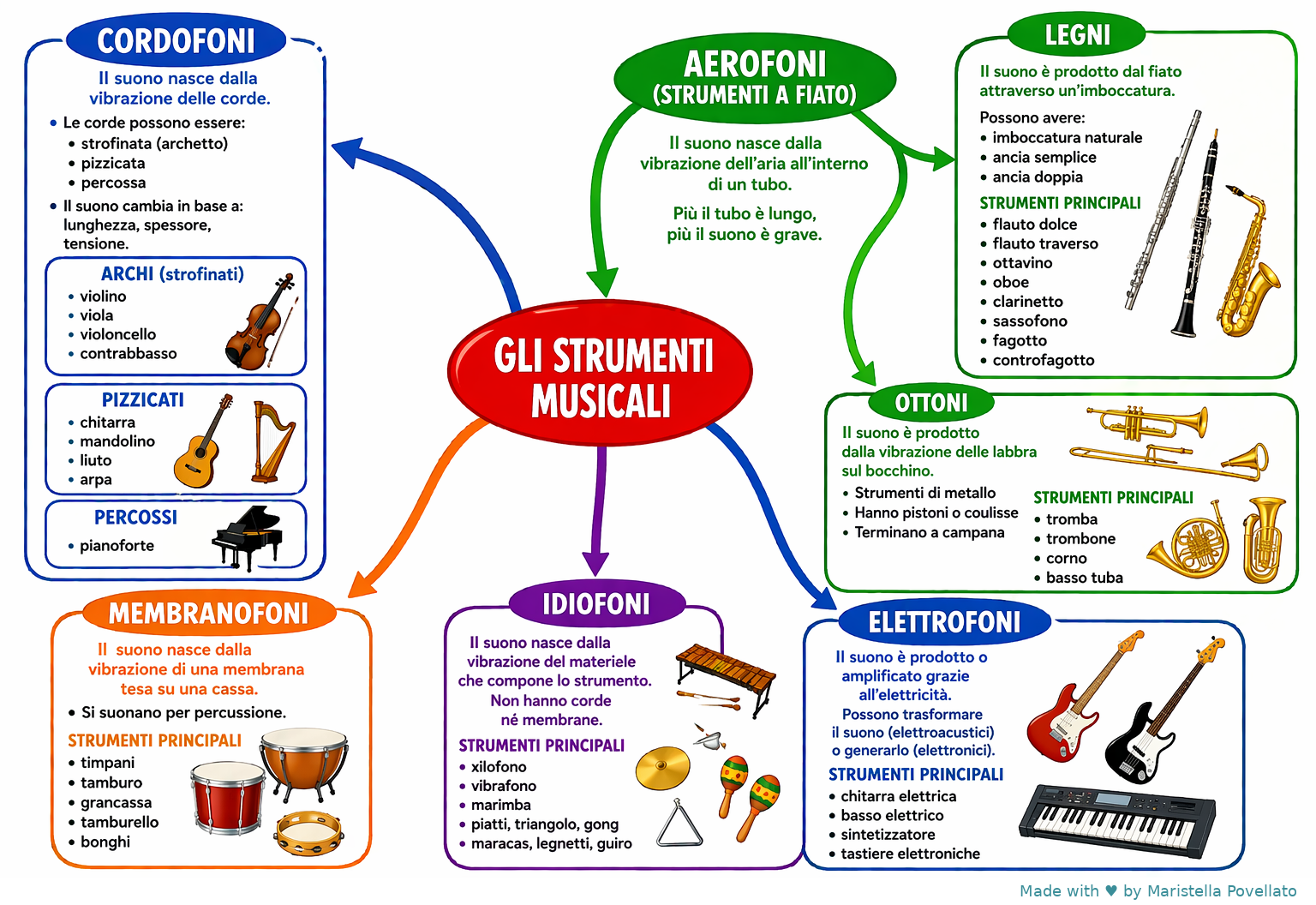
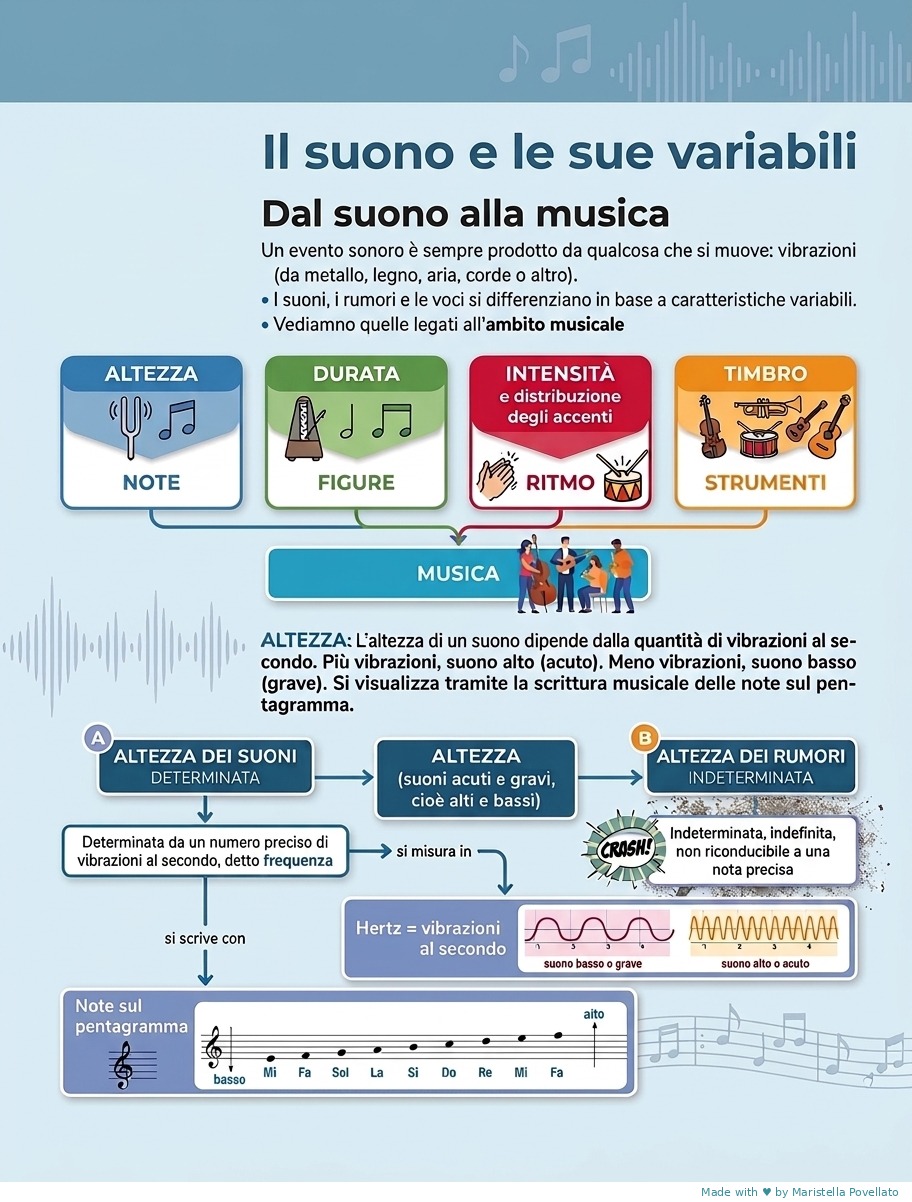
Sound is a vibration that travels through the air in the form of waves. When a wave reaches our ear, it makes the eardrum vibrate and we hear the sound. Musical sounds have regular (periodic) vibrations; noises have irregular vibrations. Every sound has four basic properties: pitch, loudness, timbre and duration. PITCH — Pitch depends on frequency, which is the number of vibrations per second (measured in hertz, Hz). More vibrations = a high-pitched sound (e.g. flute, soprano voice, violin). Fewer vibrations = a low-pitched sound (e.g. double bass, tuba, bass voice). The human ear can hear sounds from about 20 Hz to 20,000 Hz. Pitch is written on the stave: the higher the note is placed, the higher its pitch. LOUDNESS — Loudness depends on the amplitude of the vibration and is measured in decibels (dB). In music, Italian terms called dynamic markings are used: pianissimo (pp), piano (p), mezzopiano (mp), mezzoforte (mf), forte (f), fortissimo (ff). Crescendo (<) and diminuendo (>) signs indicate a gradual change in loudness. TIMBRE — Timbre is the 'colour' of a sound: it allows us to distinguish different instruments and voices even when they play the same note. It depends on the harmonics produced by the vibrating object. In music, timbre is described using many adjectives: light, dark, bright, warm, cold, sweet, harsh, ringing, soft, rough, velvety, nasal, metallic, woody, crystalline, rich, full, thin, penetrating, veiled, mellow, silvery, sombre, clear. Examples: the flute is light and crystalline, the oboe is nasal and penetrating, the cello is warm and rich, the trumpet is ringing and metallic, the clarinet is soft and velvety, and the bassoon is dark and woody. DURATION — Duration is the length of time a sound lasts. It is represented by note values: semibreve (4 beats), minim (2), crotchet (1), quaver (1/2), semiquaver (1/4), demisemiquaver (1/8). Each note value has a matching rest of the same duration. Note values are organised into bars according to the time signature (2/4, 3/4, 4/4, 6/8). We pick up and hear music through our ears. Here is an infographic of our hearing system (the ear). SOUND PROPERTIES APP